


May 19, 2026

The Business Group on Health 2026 Employer Well-being Strategy Survey examines how employers are designing and evolving their well-being strategies in the context of rising health care costs, global operations and changing employee needs.
Role of Well-Being in Workforce Strategy strategy despite challenging headwinds
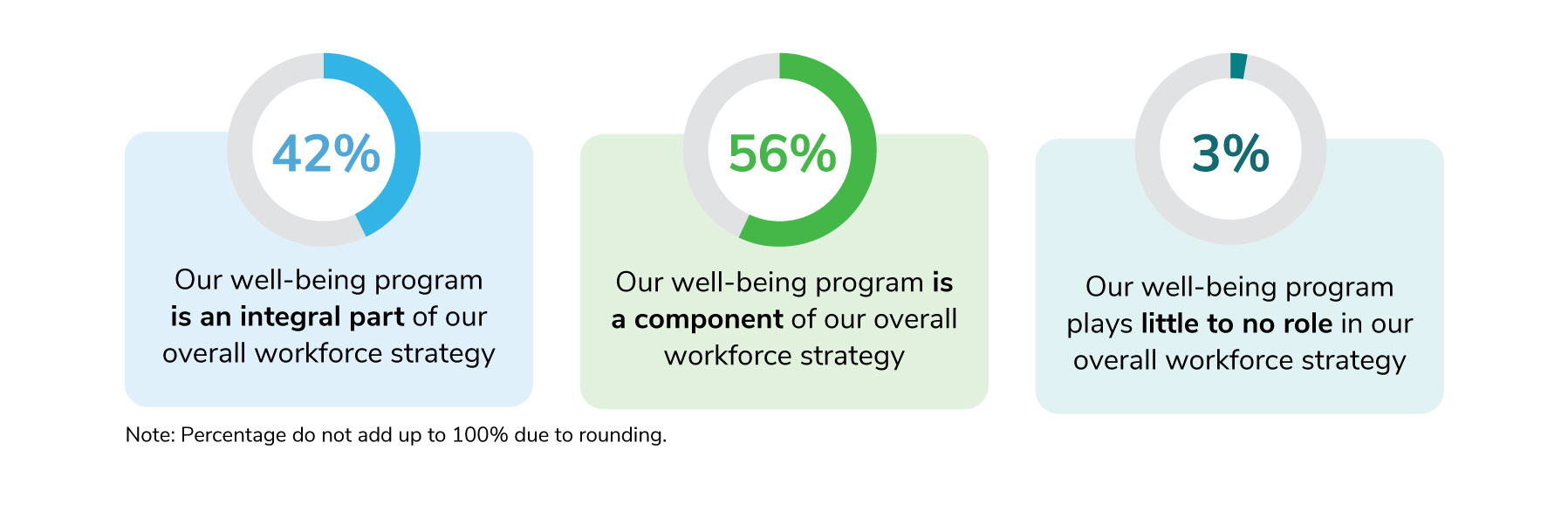
Well-being is broadly embedded in employers’ overall workforce strategies, with most organizations viewing it as a meaningful component of how they manage talent and performance.
Figure 1: Role of Well-Being in Workforce Strategy, 2026
In the face of rising health care costs, employers are responding by increasing expectations of their well-being vendors and thoughtfully reshaping program offerings.
Dimensions of Well-being
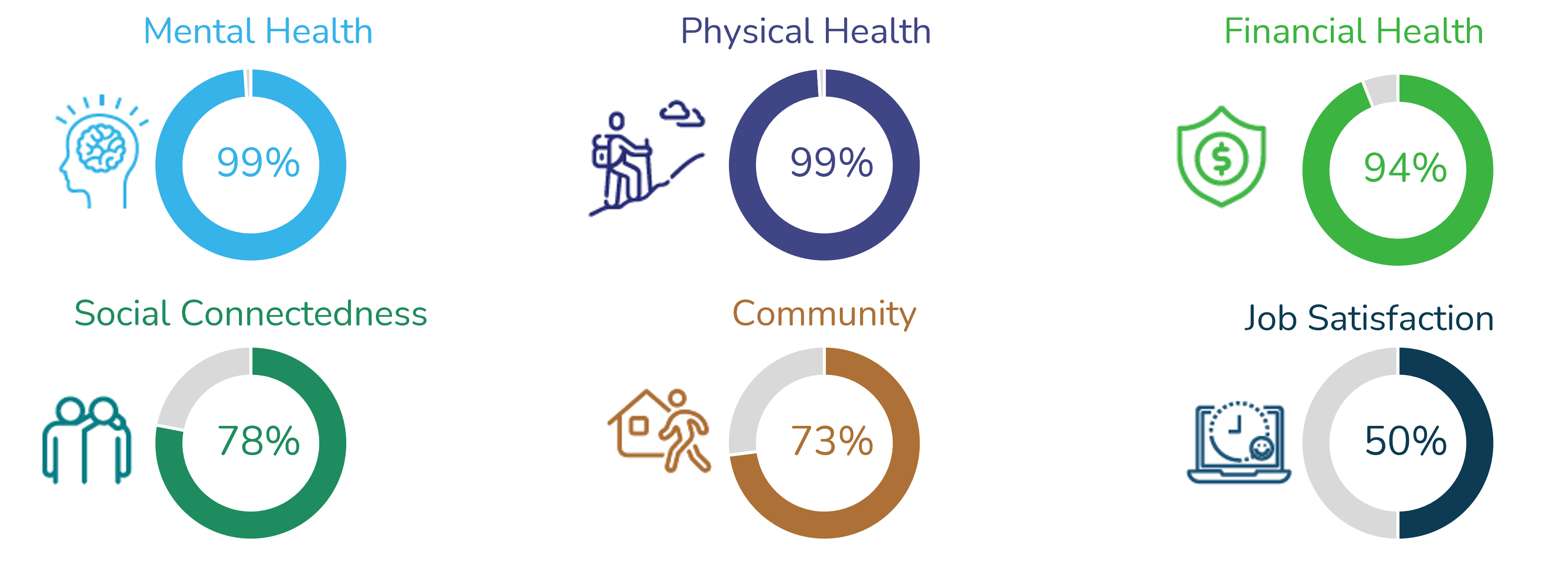
Mental health and physical health have emerged as the most prevalent strategic priorities, closely followed by financial health, while social connectedness, community and job satisfaction remain important are secondary focus areas.
Dimensions of Well-being
Other Key Findings
- Multinational organizations are moving toward globally consistent well-being principles but still adapt implementation by market to reflect local needs, budgets and vendor landscapes.
- Data and dashboards now play a central role in guiding decisions, with employers using them to track employee health trends, assess program performance and provide leaders with clear updates on well-being outcomes and program success.
- AI is an emerging, still-developing capability in well-being programs, with the potential to personalize experiences and make it easier for employees to find and use available resources. However, opportunities exist for employers to hold their partners accountable for more transparent use of AI.
Recommendations and next steps
Employers can use these findings to strengthen their well-being strategy by increasing vendor accountability, leveraging data and dashboards to guide investment decisions, and focusing on scalable offerings in mental, physical and financial health that address the highest priority needs. The results can also inform decisions on how to integrate AI more thoughtfully, refine incentives and reimbursement approaches, and align well-being efforts with broader talent, safety and workplace design priorities over the next several years.
With the added scrutiny of offerings, now is the time to pressure-test your well-being strategy to deliver the triple aim of improved outcomes, better cost management and a compelling user experience.
Citations
Before referring to or using this survey report in any way, you must receive permission from Business Group on Health. Please contact [email protected].
Suggested citation for this survey report:
Business Group on Health. 2026 Employer Well-being Strategy Survey. May 2026. Available at: https://www.businessgrouphealth.org/resources/2026-Employer-Well-being-Strategy-Survey.
More Topics
Resource
 Mental Health
Physical Activity
Financial Well-being
Mental Health
Physical Activity
Financial Well-being